

Short Answer
If an RV electrical outlet is not working but the breaker is not tripped, the most common causes include a tripped GFCI outlet, a blown fuse, loose wiring, a faulty outlet, inverter-related issues, or a damaged connection in the electrical circuit. Checking these components systematically can often restore power without replacing major electrical parts.
Introduction
Few RV electrical problems are more confusing than discovering an outlet has stopped working even though the breaker appears normal. Many owners immediately assume a breaker failure, but the cause is often hidden elsewhere in the electrical system.
In many cases, the problem is simple and inexpensive to fix. However, ignoring it can lead to inconvenience, damaged appliances, or even electrical safety risks.
This guide explains why an RV electrical outlet not working but breaker not tripped happens, how to diagnose the issue safely, and what steps you can take to restore power.
Real-World User Experience
Many RV owners first notice this problem when plugging in a phone charger, coffee maker, or laptop and finding no power at a specific outlet.
Others discover it after their RV has been sitting in storage, following a campground power interruption, or after running multiple appliances at once.
A common surprise is that several outlets may stop working together even though the main breaker panel looks completely normal.
Quick Diagnostic Checklist
Before starting detailed troubleshooting, check the following:
✓ Verify shore power is connected
✓ Test another outlet in the RV
✓ Reset all GFCI outlets
✓ Check inverter status
✓ Inspect breaker panel carefully
✓ Verify battery voltage
✓ Test the outlet with a voltage tester
✓ Look for loose or burned connections
✓ Check any inline fuses
✓ Confirm appliances work elsewhere
Common Causes of the Problem
1. Tripped GFCI Outlet
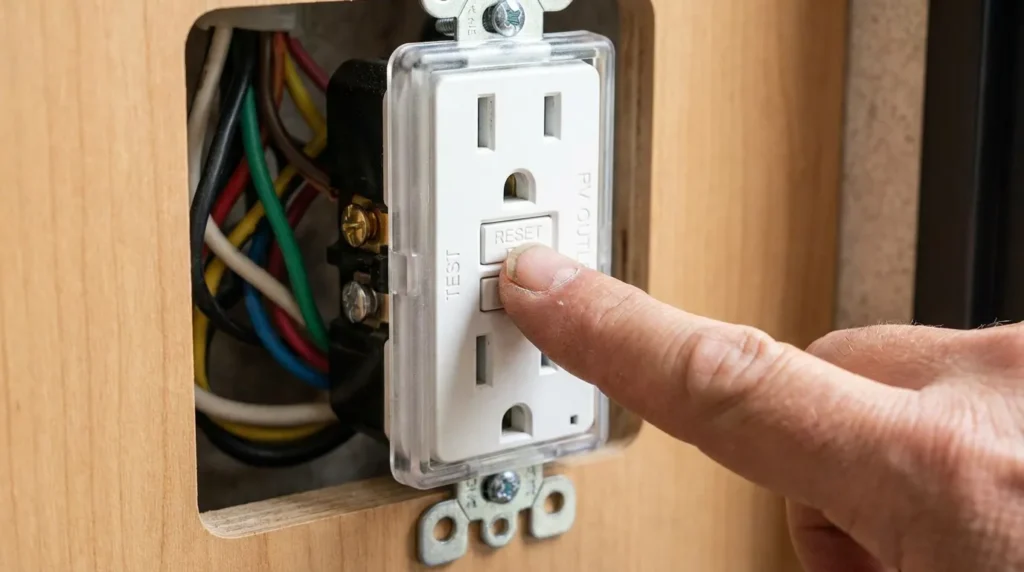
One of the most common reasons is a tripped Ground Fault Circuit Interrupter (GFCI).
Why It Happens
GFCI outlets shut off power when they detect a fault or moisture issue.
How to Identify It
- Multiple outlets stop working together
- Bathroom or kitchen GFCI reset button has popped out
- Breakers remain in the ON position
Warning Signs
- Outlet stopped working after rain
- Appliance caused a sudden shutdown
- GFCI won’t reset immediately
2. Hidden or Partially Tripped Breaker
Sometimes a breaker appears ON but has actually tripped internally.
Why It Happens
RV breakers may stop in the middle position rather than fully switching OFF.
How to Identify It
- Turn breaker fully OFF first
- Then switch it back ON
Warning Signs
- Outlet failure after heavy appliance use
- Air conditioner or microwave was running simultaneously
3. Loose Wiring Connection
RV vibration can loosen electrical connections over time.
Why It Happens
Constant road movement stresses outlet terminals and wire connections.
How to Identify It
- Outlet works intermittently
- Flickering power
- Slight burning smell
Warning Signs
- Outlet feels warm
- Appliances randomly lose power
4. Faulty RV Outlet
Outlets wear out with age and repeated use.
Why It Happens
Internal contacts become damaged or loose.
How to Identify It
- Power reaches outlet but devices won’t operate
- Voltage tester shows inconsistent readings
Warning Signs
- Loose plug fit
- Sparks when plugging in devices
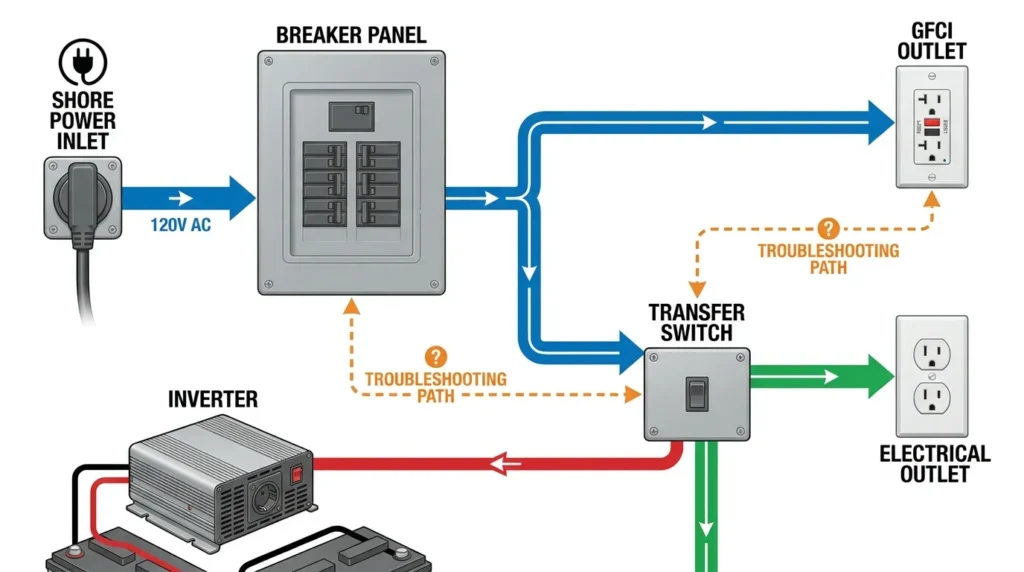
5. Inverter or Transfer Switch Problems
Many RV outlets receive power through the inverter system.
Why It Happens
A malfunctioning inverter or transfer switch can interrupt power delivery.
How to Identify It
- Certain outlets work while others do not
- Issue occurs only when using battery power
Warning Signs
- Inverter alarms
- Low battery warnings
6. Blown Fuse
Some RV circuits use fuses in addition to breakers.
Why It Happens
Power surges or overloads can damage a fuse.
How to Identify It
- Visual inspection reveals a blown fuse
- Fuse tester confirms failure
Warning Signs
- Problem appeared suddenly
- Other electrical devices remain operational
7. Damaged Outlet Wiring
Rodents, moisture, or aging wires can damage circuits.
Why It Happens
Environmental exposure weakens electrical components.
How to Identify It
- Visible damage
- Burn marks
- Corrosion
Warning Signs
- Burning odor
- Discolored outlet covers
Signs and Symptoms
Watch for these indicators:
- One outlet not working
- Several outlets losing power together
- Intermittent electrical operation
- Flickering lights
- Burning smell near outlets
- Warm outlet faceplates
- GFCI outlets repeatedly tripping
- Appliances shutting off unexpectedly
Helpful Troubleshooting Table
| Symptom | Likely Cause | First Check |
|---|---|---|
| One outlet dead | Faulty outlet | Test outlet voltage |
| Several outlets dead | Tripped GFCI | Reset GFCI |
| Works on shore power only | Inverter issue | Check inverter |
| Outlet warm to touch | Loose wiring | Inspect connections |
| Intermittent power | Damaged connection | Check wiring |
| No voltage present | Fuse or breaker issue | Test circuit protection |
Step-by-Step Solutions
Step 1: Reset Every GFCI Outlet
What To Check
Locate all GFCI outlets in the RV.
Tools Needed
None.
How To Fix It
- Press TEST.
- Press RESET.
- Verify power returns.
Expected Result
Affected outlets regain power.
Common Mistakes To Avoid
Only checking one GFCI. Some RVs have multiple GFCI locations.
Step 2: Reset the Breaker Properly
What To Check
Breaker position.
Tools Needed
None.
How To Fix It
- Turn breaker fully OFF.
- Wait 10 seconds.
- Switch back ON.
Expected Result
Power returns if breaker was partially tripped.
Common Mistakes To Avoid
Assuming the breaker is fine because it looks ON.
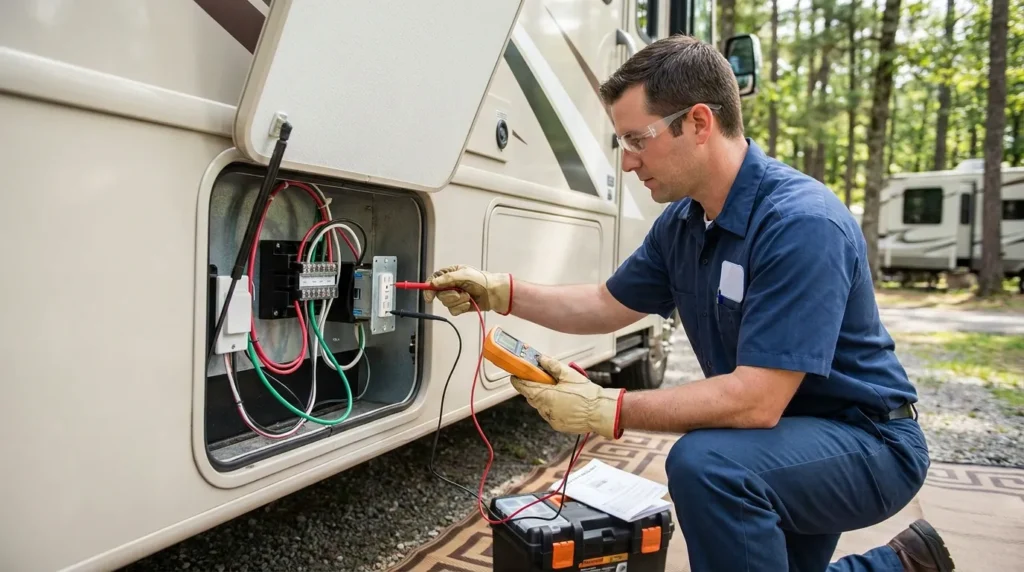
Step 3: Test the Outlet
What To Check
Voltage at the outlet.
Tools Needed
- Multimeter
- Outlet tester
How To Fix It
Test for proper voltage.
Expected Result
Approximately 120 volts on a standard RV AC outlet.
Common Mistakes To Avoid
Replacing the outlet before confirming power is present.
Also Read: Why Is My RV Battery Draining Overnight? Causes, Fixes & Prevention Guide
Step 4: Inspect the Outlet Wiring
What To Check
Terminal screws and wire connections.
Tools Needed
- Screwdriver
- Flashlight
- Multimeter
How To Fix It
Tighten loose connections and replace damaged wires.
Expected Result
Stable electrical connection.
Common Mistakes To Avoid
Working on energized circuits.
Step 5: Check Inverter Operation
What To Check
Inverter display and fault codes.
Tools Needed
Owner’s manual.
How To Fix It
Reset inverter and verify battery voltage.
Expected Result
Powered outlets resume operation.
Common Mistakes To Avoid
Ignoring low battery conditions.
Step 6: Inspect Fuses
What To Check
Fuse panel.
Tools Needed
Fuse puller or tester.
How To Fix It
Replace blown fuses with the same rating.
Expected Result
Circuit restored.
Common Mistakes To Avoid
Installing higher-rated fuses.

Related System Explanation
Understanding these RV electrical components helps simplify troubleshooting:
Converter
Converts AC power into DC power for charging batteries and operating 12-volt systems.
Inverter
Converts battery power into 120-volt household electricity.
GFCI Protection
Protects occupants from electrical shock.
Transfer Switch
Directs power from shore power, generator, or inverter.
Breakers and Fuses
Protect circuits from overloads and electrical faults.
Safety Precautions
Before performing electrical repairs:
- Disconnect shore power.
- Turn off the generator.
- Disable the inverter if applicable.
- Wear insulated gloves when necessary.
- Use properly rated testing equipment.
- Never touch exposed wires without verifying power is off.
If you smell burning insulation or see melted wiring, stop troubleshooting and seek professional help immediately.
How To Prevent This Problem In The Future
- Test GFCI outlets monthly.
- Inspect outlet connections annually.
- Avoid overloading circuits.
- Keep electrical compartments dry.
- Protect wiring from rodents.
- Check battery and inverter health regularly.
- Tighten electrical connections during routine maintenance.
Preventive inspections can often identify problems before an outlet fails completely.
When Should You Call a Professional?
Consider professional assistance when:
- Burned wiring is visible.
- Breakers continue tripping.
- GFCI outlets won’t reset.
- Electrical testing is unfamiliar.
- Transfer switch replacement is required.
- Voltage readings are inconsistent.
- You suspect hidden wiring damage.
Electrical systems can be dangerous, and some repairs require specialized diagnostic equipment.
Also Read: RV Battery Not Charging While Plugged In? Fix It Fast
Common Mistakes People Make
Ignoring GFCI Outlets
Many owners replace outlets before checking the GFCI reset button.
Replacing Parts Without Testing
Guessing can become expensive quickly.
Using the Wrong Fuse
Incorrect fuse ratings create safety hazards.
Overlooking Inverter Issues
Some outlets depend entirely on inverter power.
Working on Live Circuits
This increases the risk of shock and equipment damage.
FAQs
1. Why is my RV outlet not working if the breaker isn’t tripped?
The most common cause is a tripped GFCI outlet. Other possibilities include loose wiring, a faulty outlet, blown fuse, inverter issue, or damaged electrical connection.
2. Can a breaker fail without looking tripped?
Yes. Some RV breakers partially trip internally and still appear to be ON. Always reset them fully before assuming they are working properly.
3. How do I know if my RV outlet is bad?
Use a multimeter or outlet tester. If proper voltage reaches the outlet but appliances still don’t work, the outlet itself may be defective.
4. Why did multiple RV outlets stop working at once?
Several outlets often share a GFCI-protected circuit. When the GFCI trips, all downstream outlets can lose power.
5. Does low battery voltage affect RV outlets?
Yes. If the outlets operate through an inverter, low battery voltage can prevent the inverter from supplying power.
6. Should I replace the outlet myself?
Many RV owners can replace a standard outlet safely if power is disconnected. However, wiring issues should be diagnosed carefully.
7. What is the first thing I should check?
Start with every GFCI outlet in the RV. One of the most common reasons for an RV electrical outlet not working but breaker not tripped is a hidden GFCI trip.
Conclusion
When dealing with an RV electrical outlet not working but breaker not tripped, the cause is often simpler than it appears. Tripped GFCI outlets, loose wiring, faulty outlets, inverter issues, and blown fuses account for most cases.
Start with the easiest checks, such as resetting GFCI outlets and breakers, before moving to electrical testing. Regular inspections and preventive maintenance can reduce the likelihood of future power problems and help keep your RV’s electrical system reliable wherever you travel.
1 thought on “RV Electrical Outlet Not Working but Breaker Not Tripped: Causes and Fixes”