
Short Answer
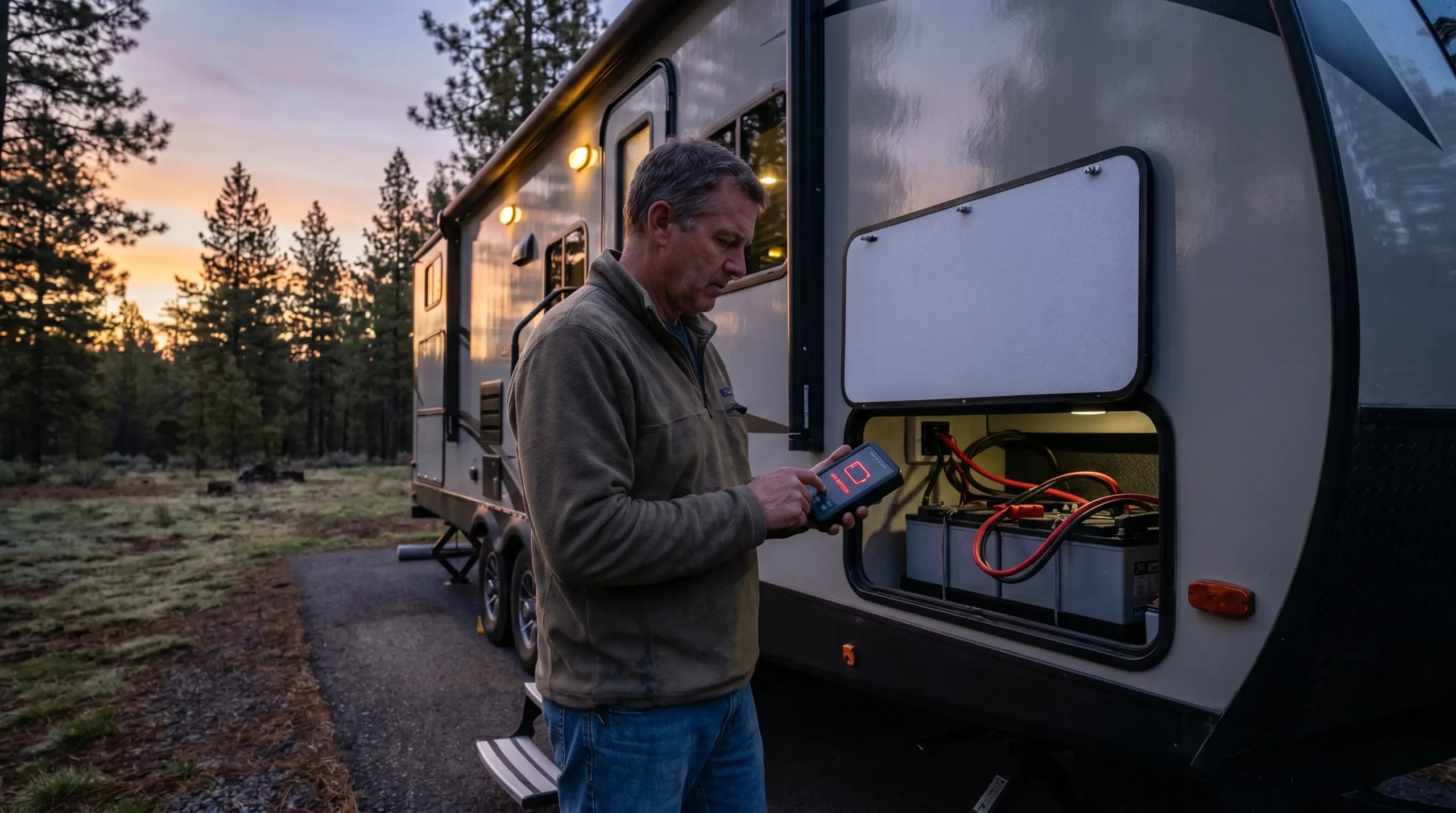
If your RV battery is draining overnight, the most common causes include parasitic power draws, aging batteries, faulty converters, electrical shorts, poor battery connections, or devices left running. A battery that loses significant charge overnight usually indicates either excessive power consumption or a charging system issue that needs troubleshooting.
Introduction
Few things are more frustrating than waking up at a campsite and discovering your RV battery is nearly dead. Whether you’re relying on the battery for lights, appliances, or essential systems, unexpected power loss can quickly disrupt your trip.
If you’re asking, “why is my RV battery draining overnight?”, you’re not alone. Many RV owners encounter this issue at some point. The challenge is that several different problems can cause overnight battery drain, and identifying the correct one is essential.
In this guide, you’ll learn the most common causes, warning signs, troubleshooting methods, and practical solutions to keep your RV battery healthy and dependable.
Real-World User Experience
Many RV owners first notice this issue after their RV sits unused overnight or while boondocking without shore power.
Common situations include:
- The battery was fully charged before bed.
- Interior lights appear dim the next morning.
- The RV won’t start or power appliances.
- Battery monitors show a significant voltage drop overnight.
- The problem worsens after the RV sits unused for several days.
In many cases, the cause is something relatively simple that can be identified through a systematic inspection.
Quick Diagnostic Checklist
Before diving into detailed troubleshooting, check the following:
✓ Verify battery charge level
✓ Check battery age
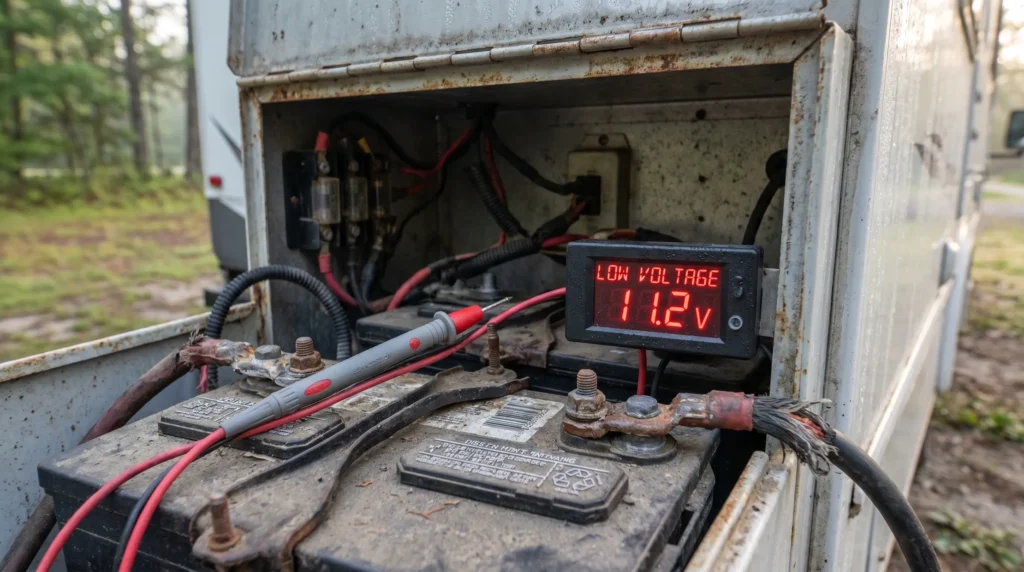
✓ Inspect battery terminals for corrosion
✓ Turn off all lights and appliances
✓ Disconnect unnecessary accessories
✓ Check for aftermarket electronics
✓ Inspect converter operation
✓ Measure overnight voltage loss
✓ Look for blown fuses or damaged wiring
✓ Confirm batteries are holding a charge
Common Causes of RV Battery Drain Overnight
1. Parasitic Power Draw
One of the most common reasons is hidden electrical loads that continue consuming power even when everything appears off.
Why It Happens
Many RV systems remain active 24/7, including:
- LP gas detectors
- Carbon monoxide detectors
- Stereo memory systems
- Wi-Fi devices
- Alarm systems
- Control boards
How to Identify It
- Battery slowly loses charge every night.
- No obvious appliance is running.
- Drain occurs even when RV is parked.
Warning Signs
- Consistent voltage loss.
- Battery requires frequent charging.
- Faster drain during storage.
2. Aging or Weak Battery
Batteries naturally lose capacity as they age.
Why It Happens
Repeated charging cycles eventually reduce the battery’s ability to store energy.
How to Identify It
- Battery charges normally but drains quickly.
- Battery struggles to maintain voltage.
- Performance worsens in cold weather.
Warning Signs
- Swollen battery case.
- Slow charging.
- Reduced runtime.
Most RV batteries begin showing noticeable performance decline after several years of use.
Also Read: RV Battery Not Charging While Plugged In
3. Faulty Converter or Charging System
Your converter charges the battery when connected to shore power.
Why It Happens
A failing converter may not fully recharge the battery.
How to Identify It
- Battery drains despite frequent charging.
- Voltage readings remain low.
- Appliances perform poorly.
Warning Signs
- Inconsistent charging.
- Flickering lights.
- Battery never reaches full charge.
4. Poor Battery Connections
Loose or corroded connections can reduce charging efficiency.
Why It Happens
Corrosion increases electrical resistance.
How to Identify It
- Visible white or green corrosion.
- Loose cable connections.
- Intermittent power issues.
Warning Signs
- Warm terminals.
- Voltage fluctuations.
- Difficult battery charging.
5. Interior Lights or Accessories Left On
This may seem obvious, but it remains a frequent cause.
Why It Happens
Small power draws accumulate throughout the night.
How to Identify It
Check:
- Storage compartment lights
- USB chargers
- Fans
- Entertainment systems
- Inverters
Warning Signs
- Battery drain occurs only during use.
- Power consumption varies from night to night.
6. Faulty Inverter
An inverter converts DC battery power into AC household power.
Why It Happens
Some inverters continue consuming power even when no devices are connected.
How to Identify It
- Battery drain stops when inverter is disconnected.
- Inverter feels warm while idle.
Warning Signs
- Excessive standby power use.
- Faster drain during overnight operation.
7. Electrical Short or Wiring Problem
Electrical faults can create unexpected power loss.
Why It Happens
Damaged wires may allow current to flow continuously.
How to Identify It
- Blown fuses.
- Burnt wire smell.
- Unusual heat near wiring.
Warning Signs
- Rapid battery discharge.
- Intermittent electrical problems.
- Safety concerns.
Signs and Symptoms of Overnight Battery Drain
Watch for these common warning signs:
Early Warning Signs
- Lights become slightly dimmer.
- Battery monitor shows lower voltage.
- Slower appliance performance.
Advanced Symptoms
- RV won’t start.
- Refrigerator controls malfunction.
- Water pump operates weakly.
- Battery requires daily charging.
The earlier you address these symptoms, the easier the repair usually becomes.
Helpful Battery Voltage Reference Table
| Battery Condition | Voltage Reading |
|---|---|
| 100% Charged | 12.7V–12.8V |
| 75% Charged | 12.4V |
| 50% Charged | 12.2V |
| 25% Charged | 12.0V |
| Nearly Dead | Below 11.9V |
Regular voltage monitoring can quickly reveal developing battery problems.
Step-by-Step Solutions
Step 1: Measure Battery Voltage
What To Check
Battery voltage before bed and in the morning.
Tools Needed
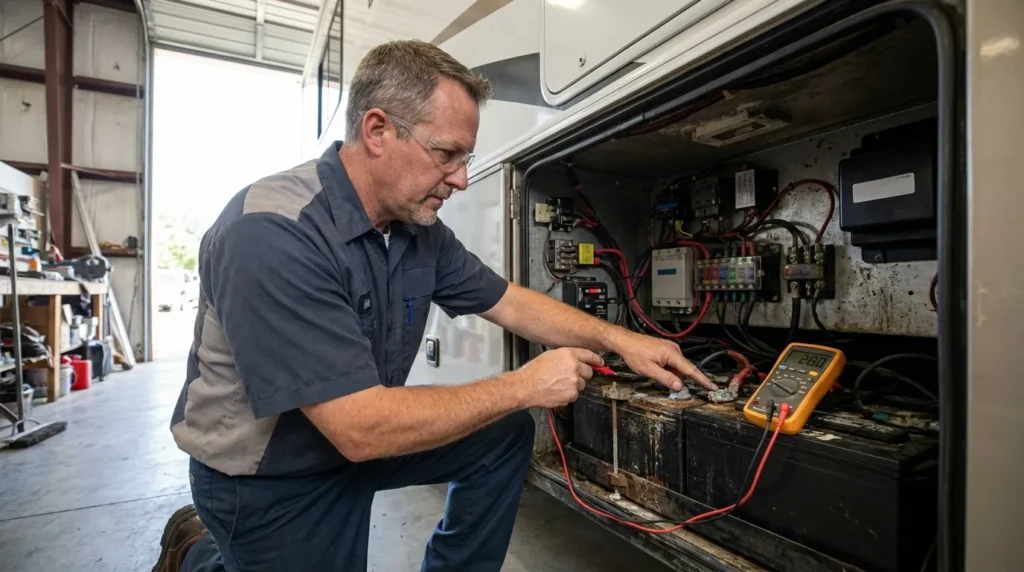
- Digital multimeter
How To Fix It
- Fully charge the battery.
- Record voltage before sleeping.
- Measure again the next morning.
- Compare the readings.
Expected Result
Minimal overnight voltage loss.
Common Mistakes To Avoid
- Measuring immediately after charging.
- Using inaccurate battery monitors.
Step 2: Identify Parasitic Draw
What To Check
Hidden electrical loads.
Tools Needed
- Multimeter with amp measurement
How To Fix It
- Turn off all devices.
- Disconnect shore power.
- Measure current draw.
- Remove fuses one at a time.
- Identify the circuit causing excessive drain.
Expected Result
Locate the source of battery consumption.
Common Mistakes To Avoid
- Ignoring factory-installed electronics.
- Testing with appliances still active.
Step 3: Inspect Battery Connections
What To Check
Battery terminals and cables.
Tools Needed
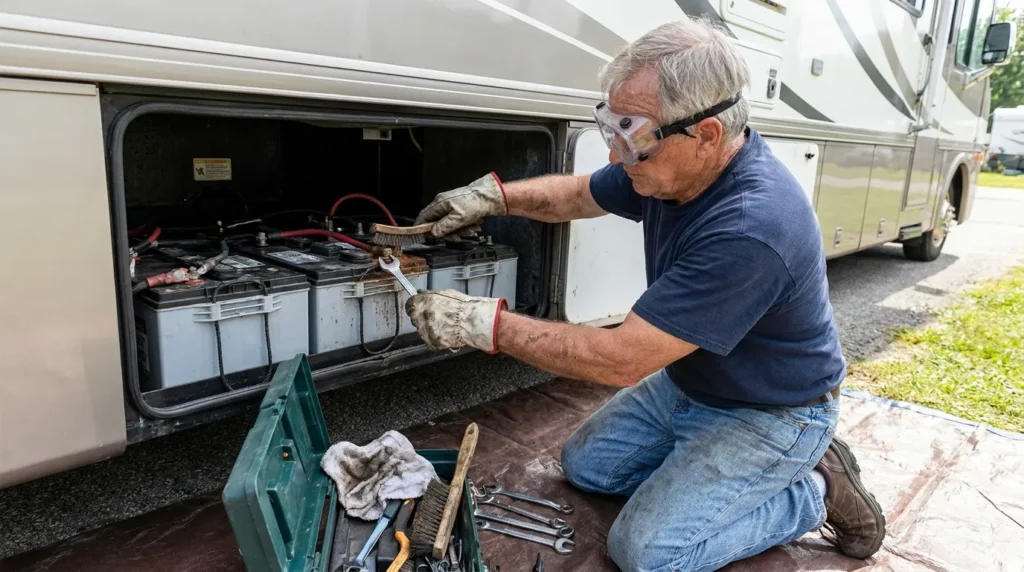
- Wrench
- Battery terminal cleaner
- Safety gloves
How To Fix It
- Disconnect battery.
- Clean corrosion.
- Tighten all connections.
- Reinstall securely.
Expected Result
Improved charging efficiency.
Common Mistakes To Avoid
- Leaving corrosion untreated.
- Over-tightening terminals.
Step 4: Test Battery Health
What To Check
Battery capacity and condition.
Tools Needed
- Battery load tester
How To Fix It
Perform a load test according to manufacturer recommendations.
Expected Result
Confirm whether replacement is necessary.
Common Mistakes To Avoid
- Assuming battery age alone determines health.
- Skipping capacity testing.
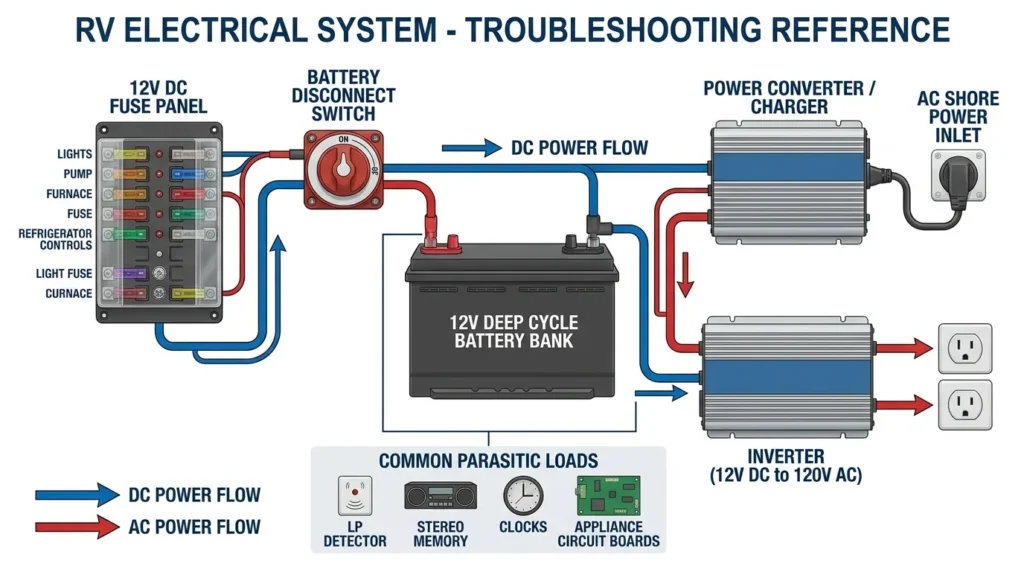
Related System Explanation
Your RV battery works closely with several other electrical components:
Converter
Charges batteries when connected to shore power.
Inverter
Provides household AC power from battery power.
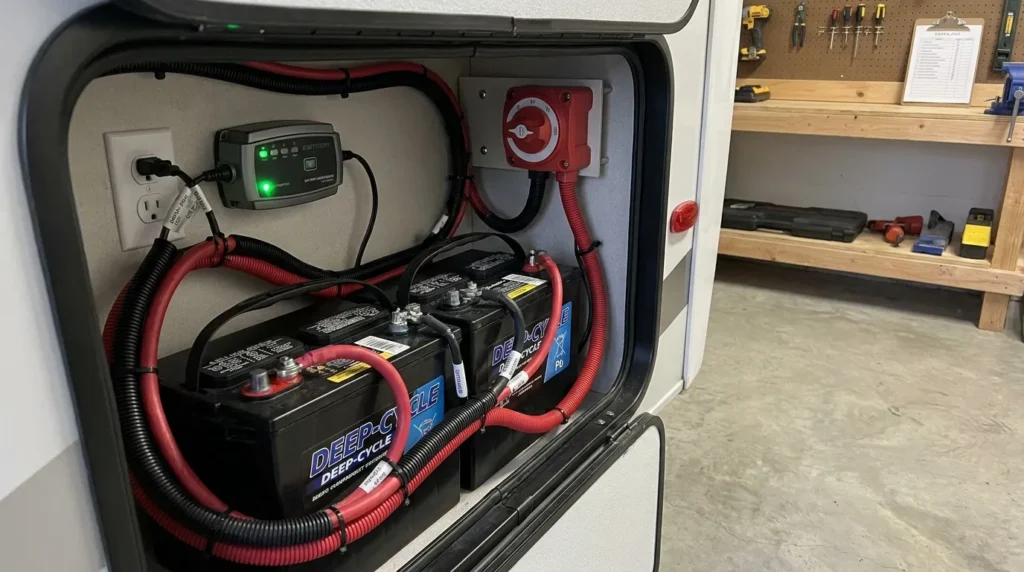
Battery Disconnect Switch
Helps isolate batteries during storage.
Fuse Panel
Protects circuits from overloads.
Charging Circuit
Transfers charging power throughout the electrical system.
Understanding these components helps diagnose battery problems more accurately.
Safety Precautions
Before working on RV batteries:
- Wear safety glasses.
- Use insulated tools.
- Disconnect power before repairs.
- Avoid sparks near batteries.
- Work in a ventilated area.
If you discover melted wires, burning smells, or damaged electrical components, professional service is the safest option.
How To Prevent This Problem In The Future
Preventive maintenance can significantly extend battery life.
Helpful Tips
- Fully charge batteries before storage.
- Use a battery disconnect switch.
- Inspect terminals monthly.
- Keep batteries clean.
- Test voltage regularly.
- Avoid deep discharges.
- Install a battery monitor.
Many owners notice fewer battery issues after adopting a regular maintenance routine.
When Should You Call a Professional?
While many battery drain issues can be diagnosed at home, some situations require professional help.
Consider contacting an RV technician if:
- You suspect an electrical short.
- Wiring appears damaged or melted.
- Fuses continue blowing repeatedly.
- The converter or inverter requires advanced testing.
- Battery drain persists despite troubleshooting.
- You are uncomfortable working with electrical systems.
Professional diagnostic equipment can often identify hidden electrical problems much faster than trial-and-error troubleshooting.
Common Mistakes People Make
Replacing the Battery Too Soon
Many owners assume the battery is bad when the real problem is a hidden electrical load or charging system issue.
Why It Happens
The battery is the most visible component.
How It Makes Things Worse
Money is spent on a new battery while the actual problem remains.
Ignoring Parasitic Loads
Small power draws are easy to overlook.
Why It Happens
Everything appears turned off.
How It Makes Things Worse
The battery continues draining every night.
Skipping Battery Testing
A battery can look normal but still have reduced capacity.
Why It Happens
Voltage readings alone do not reveal full battery health.
How It Makes Things Worse
The root cause remains undetected.
Leaving the RV Plugged In Continuously Without Inspection
Constant charging can sometimes mask developing battery problems.
Why It Happens
Owners assume shore power prevents all issues.
How It Makes Things Worse
A failing battery may deteriorate unnoticed.
Neglecting Battery Maintenance
Dirty terminals and loose connections can create charging problems.
Why It Happens
Battery compartments are often out of sight.
How It Makes Things Worse
Charging efficiency decreases over time.
FAQs
1. Why is my RV battery draining overnight even when everything is off?
Hidden electrical devices such as propane detectors, carbon monoxide detectors, stereo memory systems, and control boards often continue drawing power. These parasitic loads are one of the most common causes of overnight battery drain.
2. How do I find a parasitic drain on my RV battery?
Use a multimeter to measure current draw while all devices are turned off. Remove fuses one at a time until the current drops significantly. This helps identify the circuit causing the drain.
3. Should I disconnect my RV battery when storing my RV?
Yes. Using a battery disconnect switch or physically disconnecting the battery can help prevent unnecessary power loss during storage and extend battery life.
4. Can an RV battery be bad even if it charges normally?
Yes. A battery may accept a charge but have reduced storage capacity. Load testing is often required to determine whether the battery can still hold energy effectively.
5. How many years does an RV battery usually last?
Most RV batteries last between 3 and 7 years, depending on battery type, maintenance, charging habits, climate, and usage patterns.
6. Does an inverter drain RV batteries overnight?
Yes. Some inverters consume standby power even when no appliances are connected. If left on overnight, they can contribute to noticeable battery drain.
7. What voltage should my RV battery be in the morning?
A healthy fully charged battery typically reads around 12.6–12.8 volts after resting. Significantly lower readings may indicate overnight drain or battery health issues.