
Short Answer
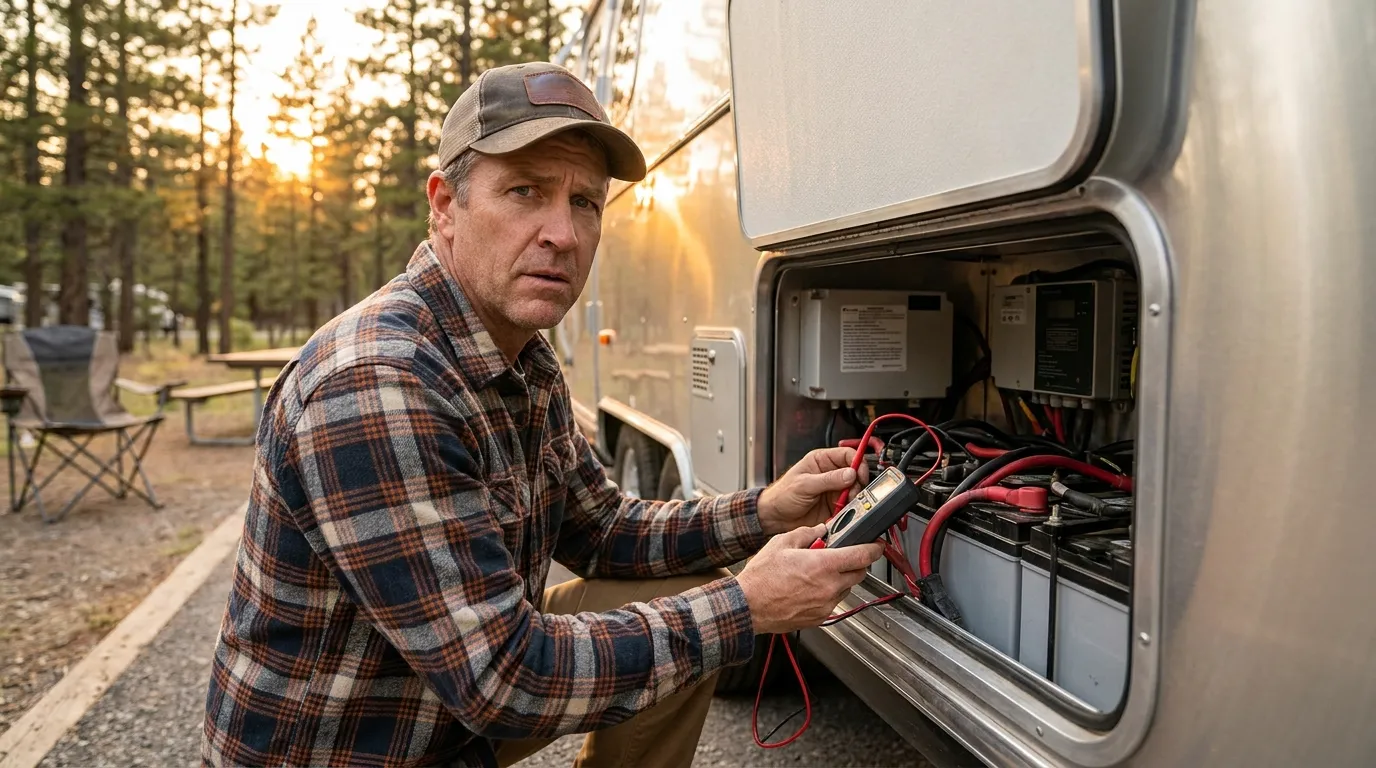
If your RV battery is not charging while plugged in, the most common causes include a faulty converter, blown fuse, damaged battery, loose wiring, bad shore power connection, or a malfunctioning battery disconnect switch. A simple inspection and voltage test can usually identify the problem and help restore proper charging.
Introduction
An RV battery should normally charge whenever the RV is connected to shore power. When it does not, you may experience dead batteries, electrical problems, and appliances that stop working when disconnected from power.
One of the most common frustrations RV owners face is discovering that their battery remains low even after being plugged in for several hours or overnight.
In this guide, you will learn why an RV battery is not charging while plugged in, how to diagnose the problem, and the steps needed to get your charging system working properly again.
Real-World User Experience
Many RV owners first notice this issue after returning from storage or a camping trip. The RV appears to have power while plugged into a campground pedestal, but once disconnected, the battery quickly dies.
Others discover the problem after replacing a battery only to find that the new battery also fails to charge properly.
In many cases, the issue is not the battery itself but another component in the charging system.
Quick Diagnostic Checklist
Before troubleshooting, go through this quick checklist:
✓ Verify shore power is connected
✓ Check campground pedestal or home outlet
✓ Inspect battery terminals
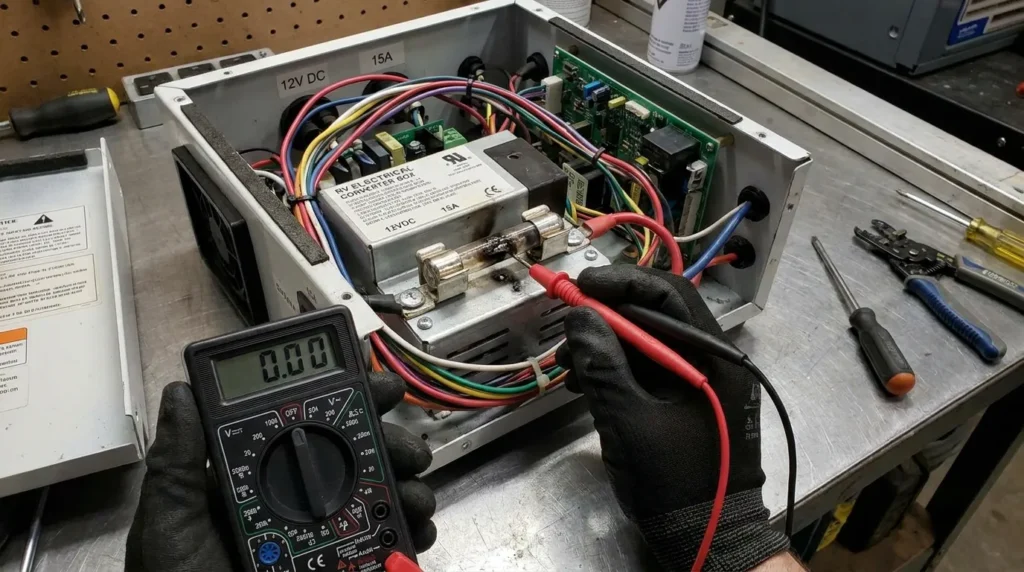
✓ Look for blown fuses
✓ Check battery disconnect switch
✓ Verify converter operation
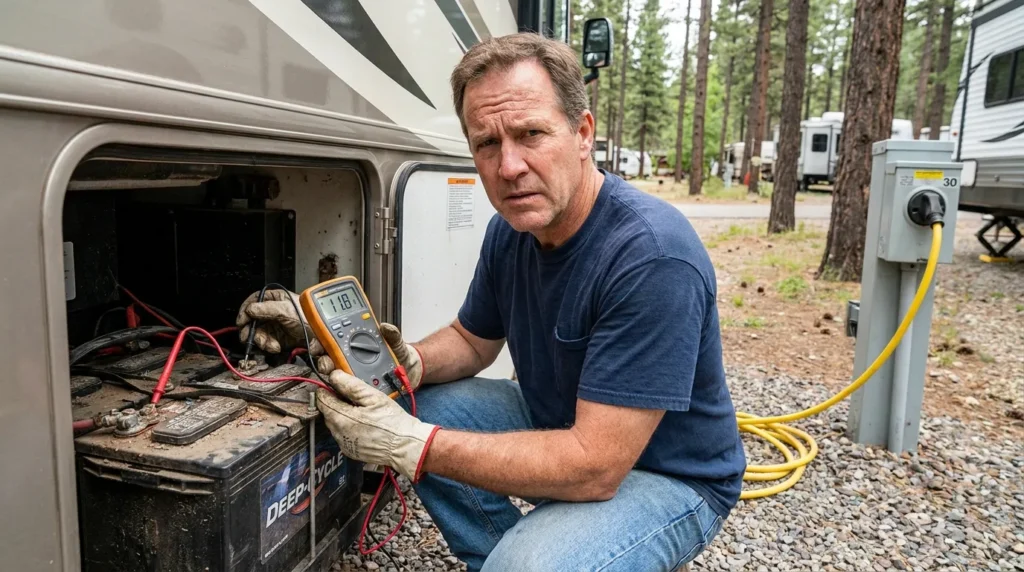
✓ Test battery voltage
✓ Inspect wiring for damage
✓ Check breaker panel
✓ Look for corrosion on connections
Common Causes of RV Battery Not Charging While Plugged In
1. Faulty RV Converter
One of the most common reasons is a failed converter.
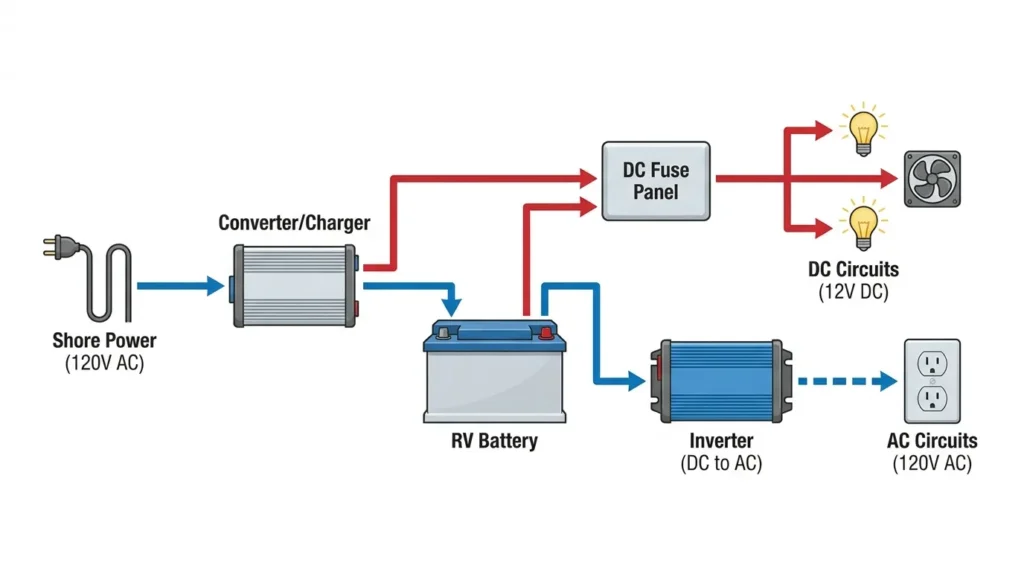
The converter changes 120-volt AC power into 12-volt DC power for battery charging and RV systems.
Warning Signs
- Interior lights dim when unplugged
- Battery voltage remains low
- No charging voltage at battery terminals
- Converter fan never runs
2. Blown Fuse
Many RV charging systems include fuses between the converter and battery.
A blown fuse can stop charging completely.
Warning Signs
- Converter appears operational
- Battery voltage never increases
- Burned or broken fuse element
3. Bad Battery
A battery may reach the end of its lifespan and lose its ability to accept a charge.
Warning Signs
- Battery older than 4–6 years
- Swollen battery case
- Rapid voltage drop
- Slow charging performance
4. Loose or Corroded Connections
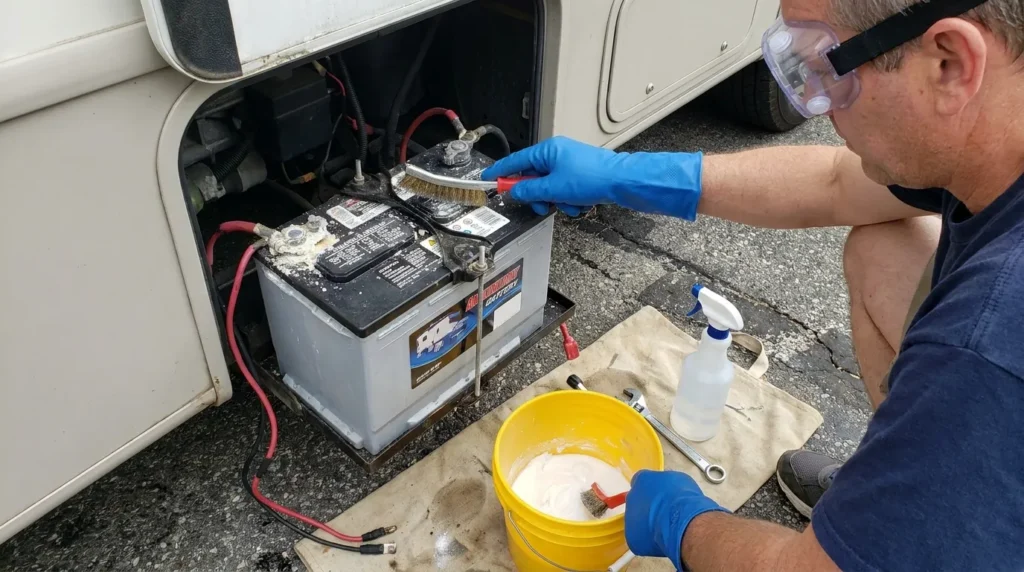
Corrosion creates resistance and can prevent proper charging.
Warning Signs
- White or green buildup
- Hot battery terminals
- Intermittent charging
5. Battery Disconnect Switch Is Off
Many RVs have a battery disconnect switch that isolates the battery from the charging system.
Warning Signs
- Battery remains disconnected
- No charging despite shore power
6. Tripped Circuit Breaker
A breaker can trip due to overloads or electrical faults.
Warning Signs
- Converter has no power
- Certain outlets stop working
7. Damaged Wiring
Worn or damaged wires can interrupt charging current.
Warning Signs
- Burn marks
- Frayed insulation
- Rodent damage
Signs and Symptoms
Common signs include:
- Battery constantly dead
- Low battery voltage readings
- Lights dimming when unplugged
- Generator required more often
- Appliances shutting down unexpectedly
- Battery warning indicators
- Slow charging performance
Early detection can prevent expensive battery replacements.
RV Battery Voltage Reference Table
| Battery Condition | Voltage Reading |
|---|---|
| Fully Charged | 12.6V–12.8V |
| 75% Charged | 12.4V |
| 50% Charged | 12.2V |
| 25% Charged | 12.0V |
| Discharged | Below 11.9V |
| Charging Properly | 13.6V–14.4V |
If the battery remains near 12 volts while plugged in, charging may not be occurring.
Step-by-Step Solutions
Step 1: Verify Shore Power
What To Check
- Power pedestal
- Extension cord
- RV power inlet
Tools Needed
- Outlet tester
- Multimeter
How To Fix It
Confirm the outlet is supplying power and all connections are secure.
Expected Result
RV receives consistent AC power.
Common Mistakes To Avoid
Assuming the pedestal is working without testing it.
Step 2: Test Battery Voltage
What To Check
Battery voltage before and after plugging in.
Tools Needed
- Digital multimeter
How To Fix It
Measure battery voltage directly at terminals.
Expected Result
Voltage should rise to approximately 13.6–14.4 volts while charging.
Common Mistakes To Avoid
Testing immediately after disconnecting power.
Step 3: Inspect the Converter
What To Check
Converter output voltage.
Tools Needed
- Multimeter
How To Fix It
Measure converter output. Replace if output is absent or incorrect.
Expected Result
Stable charging voltage.
Common Mistakes To Avoid
Replacing batteries before testing converter performance.
Step 4: Check Fuses and Breakers
What To Check
Converter fuses and DC distribution panel.
Tools Needed
- Fuse puller
- Multimeter
How To Fix It
Replace blown fuses and reset breakers.
Expected Result
Charging resumes normally.
Common Mistakes To Avoid
Replacing fuses with incorrect ratings.
Step 5: Clean Battery Connections
What To Check
Terminal corrosion and cable tightness.
Tools Needed
- Wire brush
- Safety gloves
How To Fix It
Clean terminals and tighten all connections.
Expected Result
Improved electrical flow.
Common Mistakes To Avoid
Leaving corrosion residue behind.
Step 6: Test the Battery
What To Check
Battery condition and load capacity.
Tools Needed
- Battery load tester
How To Fix It
Replace battery if it fails testing.
Expected Result
Reliable charge acceptance.
Common Mistakes To Avoid
Assuming a battery is good based solely on voltage.
Related System Explanation
Understanding these components helps with troubleshooting:
Converter
Converts AC power into DC power and charges batteries.
Inverter
Converts battery power into AC power for appliances.
Battery Disconnect Switch
Allows isolation of the battery from the RV system.
Distribution Panel
Contains breakers and fuses protecting electrical circuits.
Shore Power Connection
Supplies external electricity to the RV.
Safety Precautions
Before working on RV electrical systems:
- Disconnect shore power when necessary.
- Wear eye protection.
- Avoid shorting battery terminals.
- Use insulated tools.
- Follow manufacturer instructions.
If you smell burning wires or see melted components, stop troubleshooting and seek professional assistance.
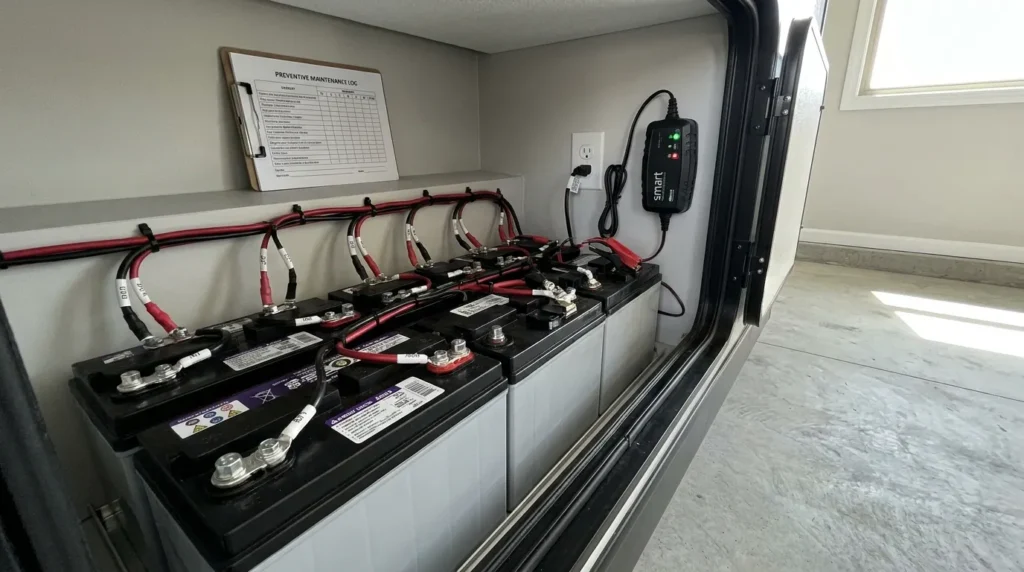
How To Prevent This Problem In The Future
Regular maintenance can prevent charging issues.
- Check battery voltage monthly.
- Clean terminals every few months.
- Inspect wiring annually.
- Test converter output regularly.
- Keep batteries properly charged during storage.
- Use a battery maintainer when parked long-term.
- Replace aging batteries before failure occurs.
Preventive maintenance is often less expensive than emergency repairs.
When Should You Call A Professional?
Consider professional diagnosis if:
- Converter replacement is required
- Wiring damage is extensive
- Breakers repeatedly trip
- Electrical burning odors are present
- Battery system modifications are needed
- You lack proper testing equipment
Electrical issues can become safety hazards if misdiagnosed.
Also Read: RV battery draining overnight
Common Mistakes People Make
Replacing the Battery First
Many owners replace the battery before testing the converter.
Ignoring Corrosion
Minor corrosion can create major charging problems.
Using Incorrect Fuses
Wrong fuse ratings may cause further electrical damage.
Not Testing Voltage
Guessing often leads to unnecessary parts replacement.
Forgetting the Disconnect Switch
A simple switch position can prevent charging entirely.
(FAQs)
1. Why is my RV battery not charging even though I’m plugged in?
The most common causes are a bad converter, blown fuse, faulty battery, damaged wiring, or a disconnected battery switch.
2. How do I know if my RV converter is charging the battery?
Measure battery voltage while plugged in. A charging battery should read approximately 13.6–14.4 volts.
3. Can a bad RV battery prevent charging?
Yes. A failed battery may no longer accept or hold a charge.
4. How much voltage should an RV battery have while charging?
Most charging systems produce between 13.6 and 14.4 volts.
5. What is the most common reason an RV battery won’t charge?
A malfunctioning converter is one of the most common causes.
6. Can a blown fuse stop battery charging?
Yes. A blown charging fuse can completely interrupt current flow to the battery.
7. Should I replace my converter or battery first?
Test both components before replacing either one. Proper diagnosis can save money and prevent unnecessary repairs.
Conclusion
If your RV battery is not charging while plugged in, start by checking shore power, battery voltage, fuses, wiring, and the converter. One of the most common reasons is a faulty converter, but loose connections, bad batteries, and blown fuses can also cause charging failures.
A simple inspection can often reveal the problem before expensive parts are replaced. Regular maintenance, battery testing, and periodic charging system checks will help keep your RV electrical system reliable and ready for your next trip.