
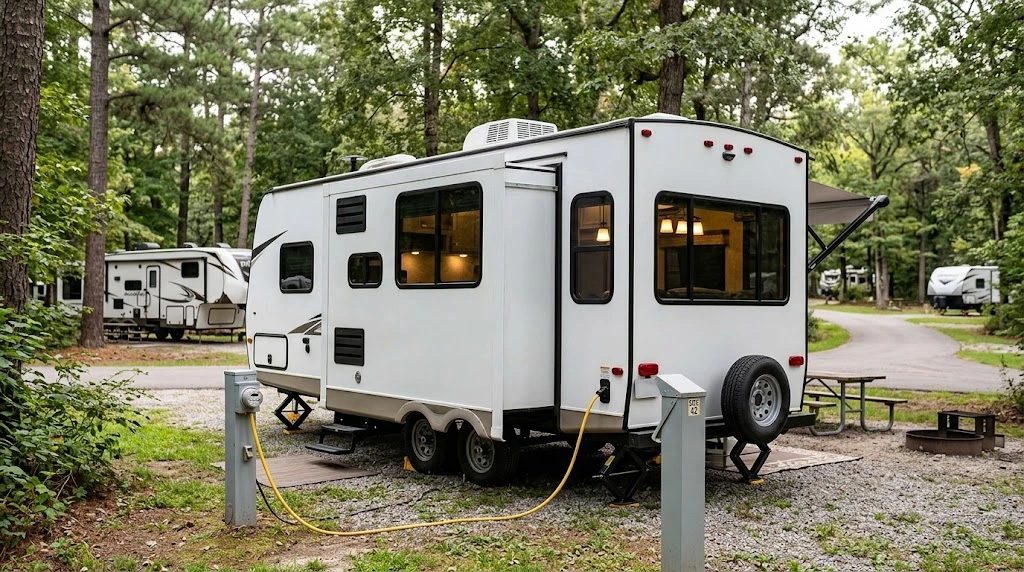
Are your RV outlets not working even though the lights are on? This is a common problem that can be frustrating, especially when you need to charge your phone, use a microwave, or run other appliances.
The good news is that working lights can help you narrow down the problem. Many RV lights run on 12-volt DC power, while standard household-style outlets usually use 120-volt AC power. This means your lights can work even when your outlets have no power.
In this guide, you will learn the common causes of this issue and what you can safely check before calling an RV technician.
Why Are My RV Outlets Not Working but Lights Are On?
Several electrical problems can cause your RV outlets to stop working.
1. A Tripped Circuit Breaker
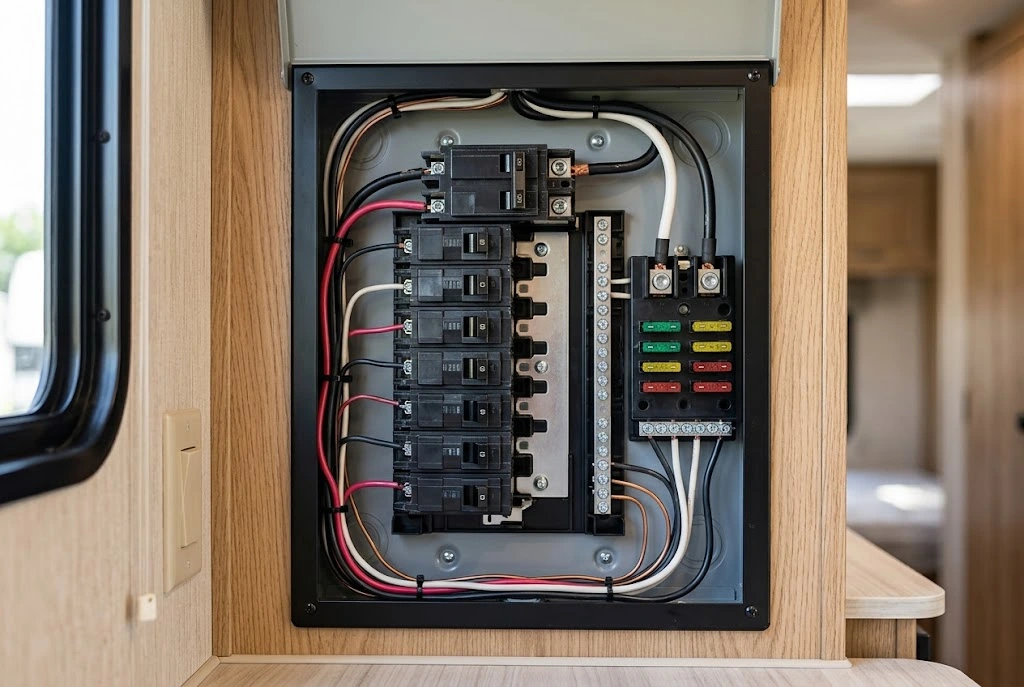
A circuit breaker protects your RV’s electrical system from excessive current. If too many appliances run at the same time, the breaker may trip and cut power to some or all outlets.
How to fix it:
- Turn off or unplug appliances connected to the affected circuit.
- Locate your RV’s electrical breaker panel.
- Check whether a breaker has tripped.
- Reset it once according to the manufacturer’s instructions.
If the breaker trips again, stop using that circuit and contact a qualified RV electrician. Do not keep resetting it.
2. A Tripped GFCI Outlet
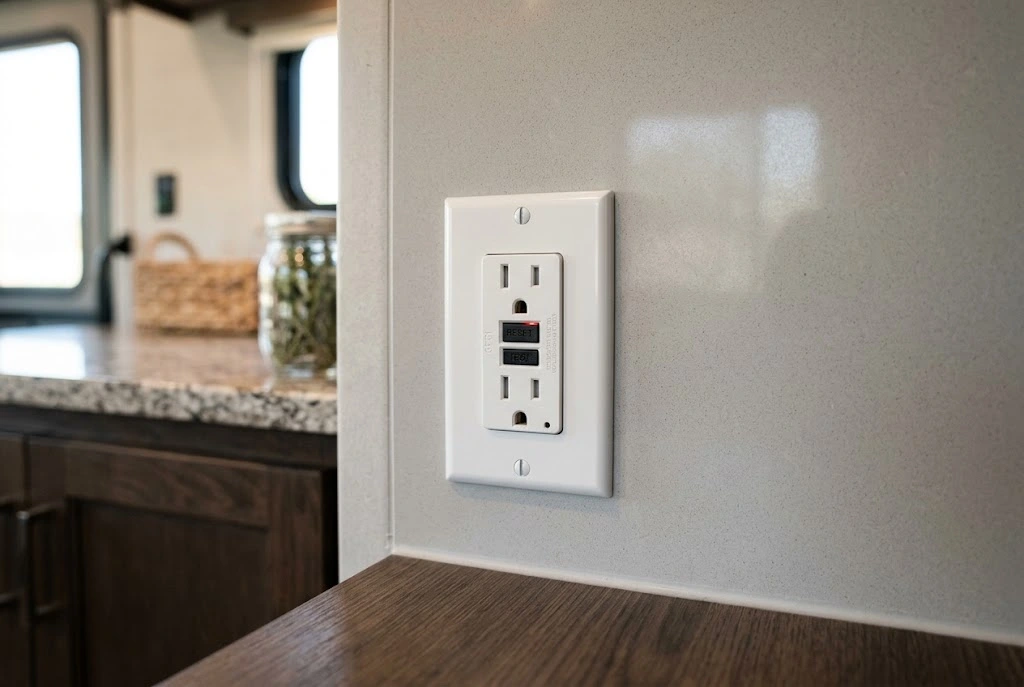
A ground-fault circuit interrupter (GFCI) helps protect people from electric shock. Some RV outlets may be connected to one GFCI outlet, so a single trip can affect several outlets.
How to fix it:
Look for a GFCI outlet with TEST and RESET buttons, often found in the kitchen, bathroom, or another wet area. If it is safe and dry, press RESET according to the manufacturer’s instructions.
If the GFCI will not reset or trips repeatedly, stop using the affected outlets and seek professional help.
3. No Shore Power or Generator Power
Your RV lights may continue working from the 12-volt battery even when the 120-volt AC supply is unavailable. This can happen if shore power is disconnected, a campground breaker trips, or a generator stops supplying power.
How to fix it:
Check that the shore power cord is fully connected and that the campground power supply is available. If you use a generator, follow its manual to check whether it is running correctly.
Never handle damaged power cords or electrical connections while they are energized.
4. An Inverter Problem
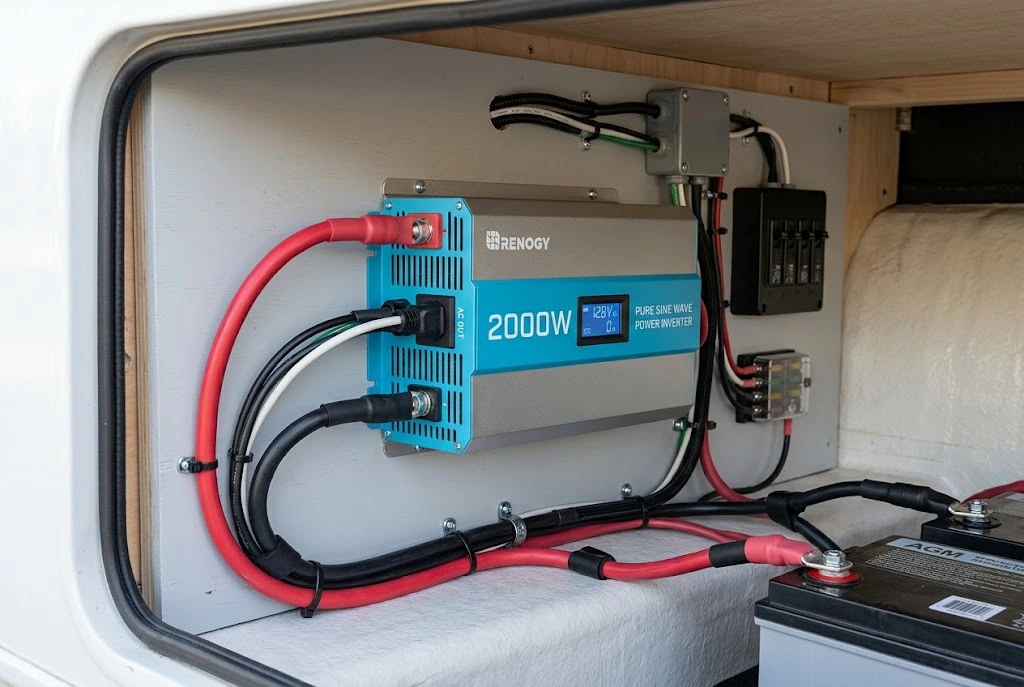
Some RV outlets receive power through an inverter, which converts battery power into AC power. If the inverter is switched off, overloaded, or reporting a fault, the outlets it supplies may stop working.
How to fix it:
Check the inverter’s display or indicator lights and review the owner’s manual. Some inverters power only selected outlets, so other outlets may work normally.
Do not open the inverter or attempt internal electrical repairs yourself.
5. A Loose Wire or Damaged Outlet
A loose connection, damaged receptacle, or wiring fault can stop one outlet or a group of outlets from working.
How to fix it:
Check whether the problem affects one outlet or several. If only one outlet fails while nearby outlets work, the receptacle or its connection may be the cause.
Do not remove outlet covers or touch exposed wiring unless you are qualified and the circuit has been safely isolated. Have a qualified RV electrician inspect damaged or loose connections.
How to Troubleshoot RV Outlets Safely
Follow these basic steps:
- Unplug appliances from the affected outlets.
- Check whether all outlets are affected or only a few.
- Inspect the breaker panel for a tripped breaker.
- Check accessible GFCI outlets and reset them once if safe.
- Confirm that shore power or generator power is available.
- Check your inverter’s status if your RV uses one.
If the problem continues, a qualified technician can test the AC supply and identify the fault.
Safety warning: Stop immediately if you notice a burning smell, sparks, hot outlets, buzzing, or damaged wiring. Disconnect power only if it is safe to do so, and seek professional help.
Also Read: RV Black Tank Not Draining: Causes and Fixes
How to Prevent RV Outlet Problems
- Avoid running too many high-power appliances on one circuit.
- Inspect power cords and plugs for visible damage.
- Test GFCI outlets according to the manufacturer’s instructions.
- Keep electrical connections dry and protected.
- Arrange regular RV electrical inspections.
FAQs
1. What could be the reasons why some of my RV power outlets are not working?
Several issues can cause some RV power outlets to stop working. Common reasons include a tripped circuit breaker, a tripped GFCI outlet, a loose connection, or a problem with the inverter. Some outlets may also be connected to a different electrical circuit than others. Check the breaker panel and accessible GFCI outlets first. If the problem continues, ask a qualified RV electrician to inspect the wiring.
2. Why would an outlet be getting power but not working?
An outlet may appear to have power but still fail to operate an appliance because of a loose connection, a damaged receptacle, or a wiring fault. The problem may also be related to the appliance or its plug. Try a known-working appliance if it is safe to do so. Avoid removing the outlet cover or touching wires. If the outlet feels hot, sparks, or smells burnt, stop using it and seek professional help.
3. Why are the lights in my camper working but not the outlets?
Many RV lights operate on a 12-volt DC system, while standard electrical outlets usually use 120-volt AC power. This means the lights can work from the RV battery even when the AC power system has a problem. A tripped breaker, GFCI outlet, missing shore power, or inverter fault may be responsible. Check the power supply and accessible breakers before contacting an RV technician.
4. Why are my RV power outlets not working even though shore power is connected?
Connecting shore power does not always mean that electricity is reaching every outlet. A tripped campground breaker, a problem with the power cord, a tripped RV breaker, or a faulty GFCI outlet may interrupt the supply. Check that the connections are secure and look for tripped breakers, following your RV manufacturer’s instructions. Never handle damaged or wet electrical connections. If the outlets remain dead, have the AC system inspected by a qualified electrician.
5. How do I reset power in an RV?
To restore power, first turn off or unplug appliances connected to the affected circuit. Check your RV breaker panel and reset a tripped breaker according to the manufacturer’s instructions. You can also check accessible GFCI outlets and press RESET if it is safe to do so. If your RV uses an inverter, check its display and manual. If a breaker or GFCI trips again, do not keep resetting it; get professional help.
6. Why would lights work but outlets not?
This usually happens because the lights and outlets use different power sources or electrical circuits. RV lights often run on 12-volt battery power, while household-style outlets generally need 120-volt AC power. A problem with shore power, the generator, a breaker, a GFCI outlet, or an inverter can stop the outlets from working while the lights remain on. Check the basic power supply and breaker settings first. If the cause is unclear, contact an RV electrician.
Final Thoughts
When RV outlets are not working but the lights are on, the issue may be a tripped breaker, GFCI outlet, missing AC power, inverter fault, or damaged wiring. Start with simple external checks and follow your RV manufacturer’s instructions.
Never ignore repeated electrical faults. Safe troubleshooting can help you find the cause and keep your RV ready for your next trip.
2 thoughts on “RV Outlets Not Working but Lights Are On”