
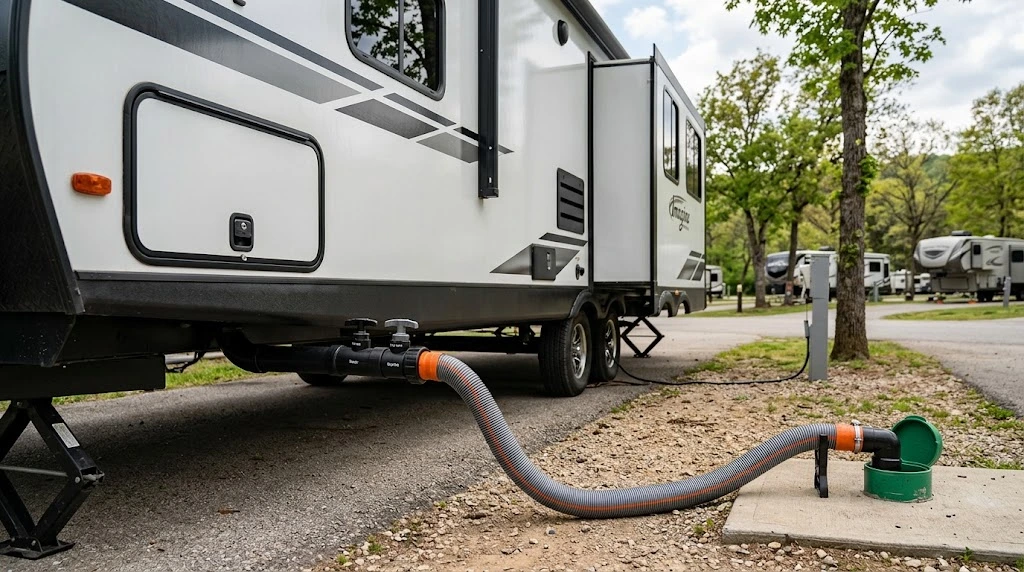
An RV black tank that will not drain can quickly turn a relaxing camping trip into a stressful experience. You may open the dump valve and find that nothing comes out, or the tank may drain very slowly. Sometimes, the toilet may also drain poorly or produce unpleasant smells.
The good news is that many RV black tank problems have common causes. A clogged outlet, a blocked pipe, a faulty valve, or waste buildup may be responsible.
In this guide, you will learn why your RV black tank is not draining and what you can do to solve the problem safely.
Why Is Your RV Black Tank Not Draining?
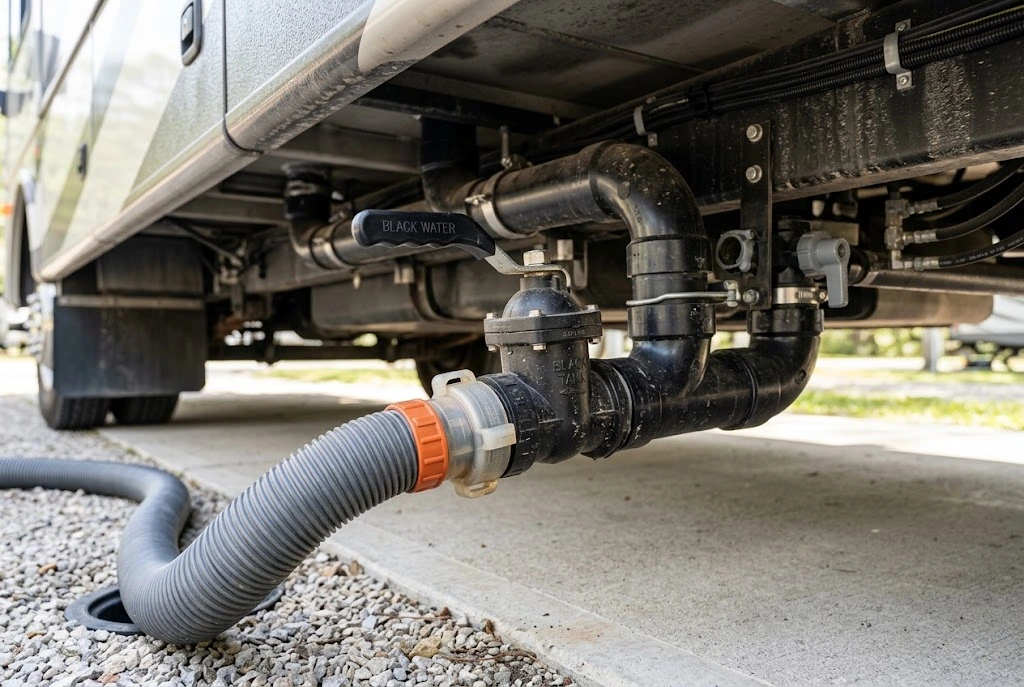
Several problems can stop an RV black water tank from draining properly.
1. Waste Buildup in the Tank
One common cause is solid waste building up at the bottom of the tank. This can happen when the tank does not have enough water or is emptied before waste has broken down properly.
How to fix it:
- Add water to the tank through the toilet if it is safe to do so.
- Use an RV tank treatment designed for black water systems.
- Allow the treatment to work according to the product instructions.
- Empty the tank using the normal dumping procedure.
Never use harsh household chemicals that may damage your RV’s plumbing or tank components.
2. A Clogged Black Tank Outlet
Toilet paper and solid waste can block the tank outlet or the pipe leading to the sewer hose. If the tank valve is open but no waste comes out, a blockage may be present.
How to fix it:
Check that the sewer hose is properly connected and is not bent or crushed. If the outlet remains blocked, use an RV-specific tank cleaning tool according to its instructions. Never force a tool into the plumbing, as this may cause damage.
3. The Black Tank Valve Is Not Opening
Sometimes, the tank is not clogged at all. The dump valve may be stuck, damaged, or disconnected from its handle.
How to fix it:
Check whether the valve handle moves normally. Do not force a stuck handle. If the handle moves without opening the valve, or the valve appears damaged, have the system inspected by an RV technician.
4. Too Little Water in the Tank
Water helps carry solid waste toward the outlet. If you regularly use very little water when flushing, waste may collect and create a blockage.
How to prevent it:
Use enough water with each toilet flush, following your RV toilet manufacturer’s instructions. Keep an appropriate amount of water in the tank between trips if recommended for your system.
5. A Blocked Sewer Hose
A damaged, twisted, or blocked sewer hose can prevent waste from flowing out even when the tank valve works correctly.
How to fix it:
Inspect the hose for visible damage, sharp bends, or crushed sections. Wear disposable gloves and use proper sanitation equipment when handling sewer connections. Replace a damaged hose rather than trying to repair an unsafe connection.
How to Unclog an RV Black Tank Safely
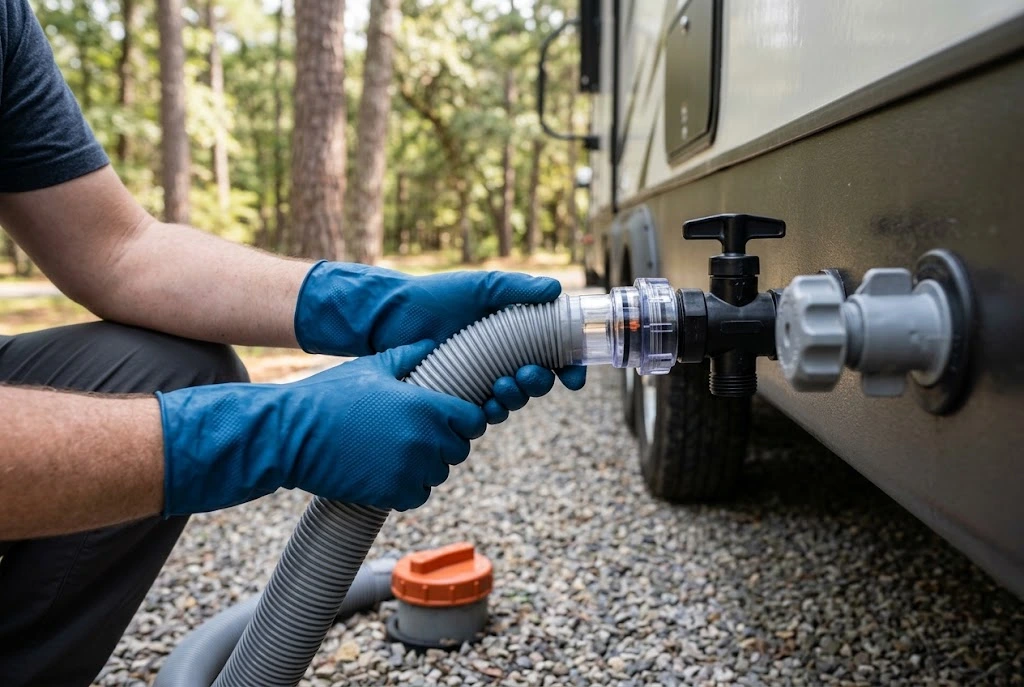
If your RV black tank is not draining, follow these basic steps:
- Park on a suitable, level surface when possible.
- Wear disposable gloves and keep your sewer hose securely connected.
- Check the hose, outlet connection, and valve handle.
- Use an RV-approved tank treatment or cleaning method.
- Follow the product instructions before trying to empty the tank again.
- If the tank remains blocked, contact an RV service professional.
Important: Never disconnect a full or pressurized sewer system to investigate a blockage. Avoid using compressed air or high-pressure methods unless the equipment and procedure are specifically approved for your RV system.
Also Read: RV Outlets Not Working but Lights Are On
How to Prevent Future Black Tank Problems
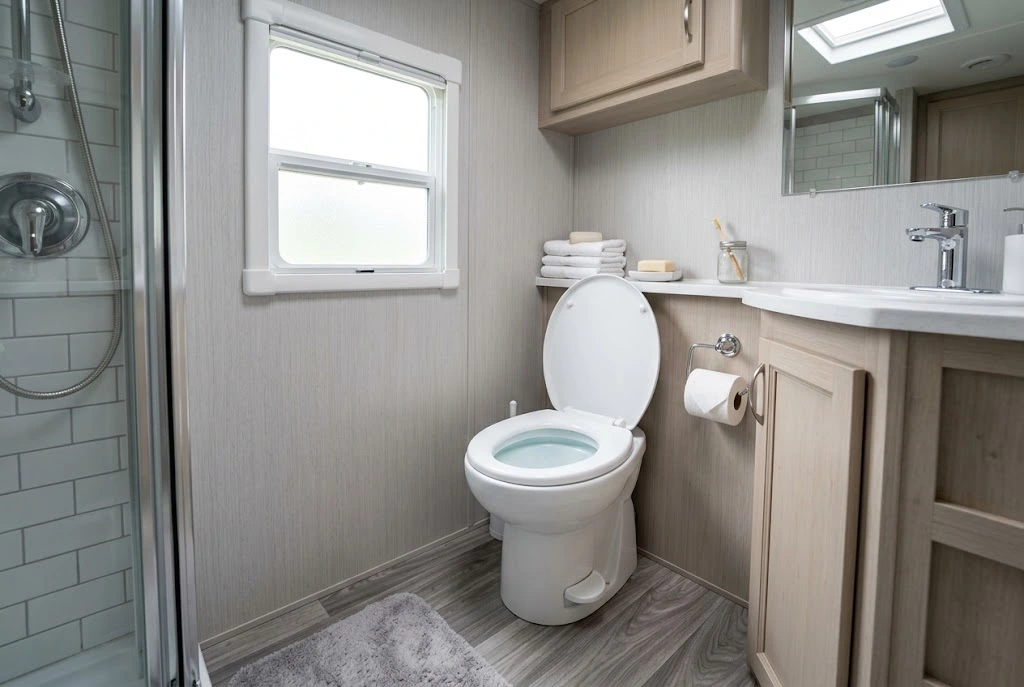
Good habits can help reduce blockages and unpleasant odors.
- Use toilet paper suitable for RV or septic systems.
- Add enough water when flushing.
- Empty the tank according to the manufacturer’s guidance.
- Use an RV-approved tank treatment when appropriate.
- Clean and maintain the tank as recommended.
- Inspect the dump valve and sewer hose regularly.
Avoid leaving the black tank valve open continuously at a full-hookup campsite unless your RV manufacturer specifically recommends that practice. It can allow liquids to drain while solids remain behind.
Also Read: RV Water Heater Pressure Relief Valve Leaking
FAQs
1. What should I do if my black tank won’t drain?
If your RV black tank won’t drain, first check that the sewer hose is connected properly and is not bent or crushed. Make sure the dump valve is opening correctly. A blockage caused by solid waste or toilet paper may also prevent draining. Use an RV-approved tank cleaner according to its instructions. Never disconnect a full tank or force a stuck valve. If the blockage remains, contact an RV technician.
2. What happens when a black tank gets too full?
When an RV black tank becomes too full, waste and water may back up into the toilet or cause unpleasant odors. In some cases, waste may overflow into parts of the plumbing system. To avoid this problem, empty the tank when needed, following your RV manufacturer’s guidance. Do not rely only on the tank level monitor because its readings may be inaccurate if sensors become dirty.
3. How do I know if my black tank vent is clogged?
A clogged black tank vent may cause strong odors inside or around the RV, unusual gurgling sounds, or pressure problems when flushing the toilet. However, these symptoms can also have other causes. Check the vent opening on the roof for visible debris only if you can do so safely. Avoid climbing onto a wet or unstable roof. If the problem continues, have an RV technician inspect the vent system.
4. What is safe to use to unclog an RV black tank?
Use an RV-specific black tank cleaning product or a tank-cleaning tool approved for your system. Follow the product instructions and your RV manufacturer’s guidance. Adding an appropriate amount of water may also help soften waste buildup. Avoid harsh drain cleaners, boiling water, and unapproved chemicals because they may damage seals or plumbing components. Never use compressed air to force a blockage out unless the equipment and procedure are specifically approved for your tank.
5. How long should I let a black tank drain?
An RV black tank often drains within a few minutes, but the time depends on tank size, waste levels, and whether a blockage is present. Keep the sewer hose securely connected and allow the tank to empty through the normal dumping process. Do not assume the tank is empty just because the flow slows down. If nothing comes out or draining stops unusually early, check the valve and hose for possible problems.
6. Why is my RV water not draining?
If water is not draining in your RV, the cause depends on where the problem occurs. A slow bathroom or kitchen sink may have a clogged drain, while a toilet that will not flush properly may have a different plumbing issue. If the problem involves the black tank, waste buildup or a blocked outlet may be responsible. Avoid using chemical drain cleaners until you identify the affected system, and seek professional help if the blockage does not clear safely.
Final Thoughts
An RV black tank not draining can result from waste buildup, a blocked outlet, a faulty valve, or a damaged sewer hose. Start with simple checks and use RV-approved cleaning methods. Avoid forcing stuck valves or opening a blocked waste system.
Regular maintenance and proper flushing habits can help keep your RV black water tank working properly and make your next road trip more enjoyable.
2 thoughts on “RV Black Tank Not Draining: Causes and Fixes”